Posts

E38 - Tense Neck - Deception Tips Podcast

Image
Deception Tip 38: When a liar is under pressure or duress, the muscles of the neck may tense up and the veins may protrude.

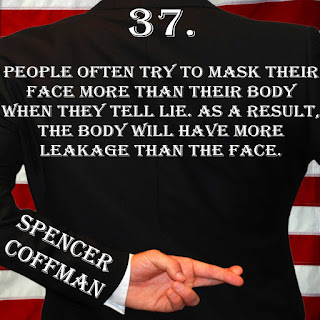
E37 - Mask The Face - Deception Tips Podcast

Image
Deception Tip 37: People often try to mask their face more than their body when they tell lie. As a result, the body will have more leakage than the face.

E36 - Rubbing Eyes - Deception Tips Podcast

Image
Deception Tip 36: Liars may pretend to have something in their eye and rub it with their hand  or finger in an unconscious attempt to block unlikable stimuli.

E35 - Mirror Movements - Deception Tips Podcast

Image
Deception Tip 35: Truthful people tend to mirror head movements of the person with whom they converse, whereas a liar takes a more statuesque pose.

E34 - Liars Lips - Deception Tips Podcast

Image
Deception Tip 34: The lips of liars take on all sorts of positions; they may suck them  inward, pucker them, bite their lower lip, or point the lip corners  downward.

E33 - Third Person - Deception Tips Podcast

Image
Deception Tip 33: A liar may tend to speak in the third person and/or use distancing pronouns. Example: Saying one instead of I.

E32 - Lick Lips - Deception Tips Podcast

Image
Deception Tip 32: When lying, people tend to experience severe dry mouth. As a result, they may frequently lick their lips.

E31 - Unconventional Language - Deception Tips Podcast

Image
Deception Tip 31: Liars like to use unconventional, and in ordinary, language in an effort to sound more truthful and sophisticated.

E30 - Bounce Both Legs - Deception Tips Podcast

Image
Deception Tip 30: Liars may rapidly bounce both of their legs in a non-rhythmic fashion to release the stress or tension involved in telling a lie.

E29 - Step Backward - Deception Tips Podcast

Image
Deception Tip 29: When accused, a liar will often take a step backward, and sometimes raise their hands, as if to ward off the accusation.

E28 - Micro Expressions - Deception Tips Podcast

Image
Deception Tip 28: Truthful facial expressions of emotion are micro-expressions, and appear for less than a second. They are unconscious and symmetrical.

E27 - Suggesting Consequences - Deception Tips Podcast

Image
Deception Tip 27: When asked, a guilty person will often propose a more lenient consequence, as opposed to a more common sense, or standard, consequence.

E26 - Accusing Liars - Deception Tips Podcast

Image
Deception Tip 26: Often times, accusing a liar of a more serious crime may entice them to admit to, or agree with, the accusation of a lesser crime.

E25 - Yes Or No - Deception Tips Podcast

Image
Deception Tip 25: The longer it takes to answer a simple yes or no question, the more suspicious the target should be.

E24 - Pledging Truthfulness - Deception Tips Podcast

Image
Deception Tip 24: Liars often over pledge their truthfulness using honest, or anti lie, phrases. Example: To be honest, To tell you the truth.

E23 - Left Side - Deception Tips Podcast

Image
Deception Tip 23: Watch facial expressions carefully. If the left side is more expressive than the right, that may indicate false emotion or deception.

E22 - Locked Ankles - Deception Tips Podcast

Image
Deception Tip 22: Seated liars will often lock their ankles and may even tuck them back in an attempt to minimize their body and block off the perceptions of others.

E21 - Suggesting Answers - Deception Tips Podcast

Image
Deception Tip 21: When a target suggests the correct answer, a liar’s face will freeze for less than a split second, like a deer in the headlights. Eyes open and mouth in an ‘O’ shape.

E20 - Eye Contact - Deception Tips Podcast

Image
Deception Tip 20: Liars often display increased eye contact. As if to see that the target believes their lie.

E19 - Contempt - Deception Tips Podcast

Image
Deception Tip 19: Contempt is the only asymmetrical facial expression. Liars may display it when targets suggest incorrect, or inept, answers.

E18 - Distancing Language - Deception Tips Podcast

Image
Deception Tip 18: Liars often use distancing language when speaking about someone they would like to avoid being associated with. Example: That man instead of his name.

E17 - Detailed Stories - Deception Tips Podcast

Image
Deception Tip 17: Liars add lots of detail to their stories and can be overly specific. Whereas truth tellers use more general statements and estimations.

E16 - Symmetrical Gestures - Deception Tips Podcast

Image
Deception Tip 16: Beware of asymmetrical gestures, as truthful expressions are symmetrical. Shoulder shrugs more prominent on one side may be indicative of deception.

E15 - Rehearsed Stories - Deception Tips Podcast

Image
Deception Tip 15: Liars rehearse the events of their story in order. To trip them up, ask them to tell it in reverse. Often times they will be unable to do so.

E14 - Symmetrical Expressions - Deception Tips Podcast

Image
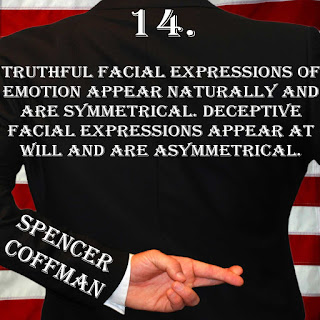
Deception Tip 14: Truthful facial expressions of emotion appear naturally and are symmetrical. Deceptive facial expressions appear at will and are asymmetrical.

E13 - Stay Silent - Deception Tips Podcast

Image
Deception Tip 13: Let the liar speak. Stay silent. Often times, liars will continue to speak until they believe the target believes their lie. They may contradict themselves thus revealing the truth.

E12 - Simultaneous Gestures - Deception Tips Podcast

Image
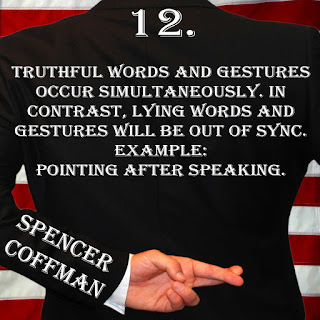
Deception Tip 12: Truthful words and gestures occur simultaneously. In contrast, lying words and gestures will be out of sync. Example: Pointing after speaking.

E11 - Accepting Lies - Deception Tips Podcast

Image
Deception Tip 11:  Liars will seize any opportunity to be believed. Therefore, it is very likely that the liar will accept lies told by the target even if they may be incriminating.

E10 - Quick Answers - Deception Tips Podcast

Image
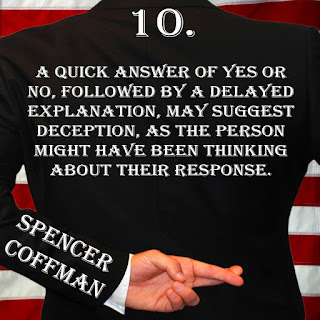
Deception Tip 10: A quick answer of yes or no, followed by a delayed explanation, may suggest deception, as the person might have been thinking about their response.

E9 - Converting Statements - Deception Tips Podcast

Image
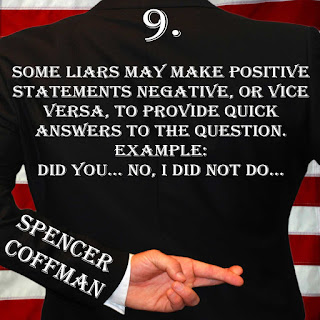
Deception Tip 9: Some liars may make positive statements negative, or vice versa, to provide quick answers to the question. Example: Did you… No, I did not do…

E8 - Defensive Barriers - Deception Tips Podcast

Image
Deception Tip 8: Liars will often unconsciously place object(s) between themselves and the target as a defensive barrier.

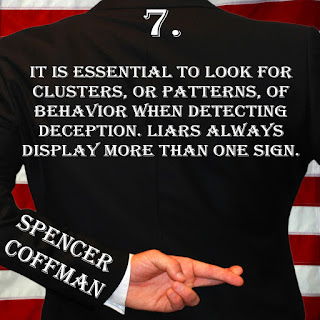
E7 - Clusters Of Behavior - Deception Tips Podcast

Image
Deception Tip 7: It is essential to look for clusters, or patterns, of behavior when detecting deception. Liars always display more than one sign.

E6 - Covering Genitals - Deception Tips Podcast

Image
Deception Tip 6:  When a liar is questioned, vulnerability may be shown by unconsciously covering the genital area. Either with folded hands or an object.

E5 - Contractions - Deception Tips Podcast

Image
Deception Tip 5: Guilty people often avoid using contractions as if to emphasize their innocence. Example: using did not instead of didn’t.

E4 - Physical Tasks - Deception Tips Podcast

Image
Deception Tip 4: While reciting a rehearsed lie, it is difficult to perform physical tasks, such as making coffee. The liar will most likely stand perfectly still with items in hand.

E3 - Contradictory Behaviors - Deception Tips Podcast

Image
Deception Tip 3: Contradictory behaviors, such as saying no while nodding yes, are often displayed by liars.

E2 - Dilated Pupils - Deception Tips Podcast

Image
Deception Tip 2: Dilated Pupils are a sign of arousal or keen interest. Beware of pinpoint pupils when others are speaking.

E1 - Folding Arms - Deception Tips Podcast

Image
Deception Tip 1:  Liars will often fold their arms defensively in an unconscious attempt to minimize body language.

E0 - Deception Tips Trailer - Deception Tips Podcast

Image
Welcome to the Deception Tips Podcast. Today you will begin a journey that will teach you how to read people and detect deception!